A Top Result Is Not the Same as the Best Answer
A top result is not the same as the best answer: learn to identify a source’s purpose before trusting its claims, and choose evidence that fits your question.

A top result is not the same as the best answer, because a search position tells you where a page appeared, not what the page is trying to do. Before relying on a claim, identify who produced it and what the source is for. That small pause helps distinguish a useful explanation from an advert, an advocacy page or a record that has been taken out of context.
Prominent results can be helpful starting points. A government department may put a current service page near the top; a specialist organisation may provide a clear account of its own field. But prominence alone cannot tell you whether a page answers your particular question, whether it has a commercial or institutional purpose, or whether its claims rest on evidence you can inspect.
Three kinds of answers
When a result looks persuasive, compare it with the job you need the answer to do. Most pages fall broadly into one of three useful categories: primary records, specialist interpretation and service or promotional material. These categories are not grades. Each can be valuable, but each supports different conclusions.
- Primary records include original documents, datasets, regulations, transcripts and official notices. They are useful when you need to know what a document says or what an organisation formally recorded. They may require context or specialist knowledge before they answer a broader question.
- Specialist interpretation includes explanatory pages from subject experts, professional bodies, universities, museums and established reference services. It can make unfamiliar material easier to understand. Check whether the author explains the basis for the account and distinguishes established information from interpretation.
- Service and promotional material includes product pages, consultancy sites, campaign material and pages designed to attract customers, members or supporters. It can provide direct information about an organisation’s own offer or position. Treat claims about wider effects or competing options as claims to assess, rather than neutral conclusions.
There is overlap. A public agency can explain a rule while also directing readers to its services. A charity can publish both a campaign statement and a carefully sourced briefing. The page’s purpose matters more than the label attached to the organisation.
Start with the source
Look for the publisher, the author or responsible team, and the page’s stated purpose. These details may sit in a byline, an “About” page, a footer or a publication note. If the page gives no clear account of who stands behind it, that is a reason to withhold confidence, not proof that every sentence is false.
Next, ask what the publisher is positioned to know. A local council is a direct source for its own opening arrangements. It may not be the best source for a broad comparison of services across a country. A manufacturer can explain the features of its own product; an independent technical body may be better placed to compare products using a common method.
Then consider what the publisher wants a reader to do. The purpose might be to inform, record, sell, recruit, persuade, entertain or direct people to a service. A page can have several aims. Notice calls to action, links to products or donations, and language that presents one interpretation as the only reasonable one. These signals help you judge the material’s role without dismissing it outright.
Match evidence to purpose
For a question about what an organisation officially announced, seek its original notice or document. For a question about what that announcement means, look for a careful explanation that identifies the document and sets out how it was interpreted. For a question about the organisation’s own position, its statement may be the relevant evidence, while remaining only one side of a wider issue.
This is the difference between a source being authentic and a source being sufficient. An authentic page can establish what its publisher said. It does not, by itself, establish that every factual claim in that statement is accurate, that the claim applies beyond the stated setting, or that an interpretation is uncontested. Be precise about what the page can actually support.
Imagine you are trying to learn whether a public library offers remote access to a particular database. A prominent travel blog mentions the library, but its page is about nearby attractions and gives no date for the access information. The library’s current digital-services page is a more direct source for availability; if you also need to know whether your account qualifies, the library’s terms or staff guidance are better suited to that narrower question. Each source answers a different part of the problem.
It is not worth spending time decoding every detail of a publisher’s corporate structure when the page makes a modest, easily checked claim. Concentrate on details that could change your decision: who is responsible, what the page aims to do and whether the evidence fits the claim.
Check the claim itself
A source’s identity gives you context, but the wording and support of a particular claim still deserve attention. Separate what the page directly documents from what it infers. A notice may state a policy; a commentary may describe the policy’s likely effect. Those are different kinds of statements and need different support.
Look for links to the material behind a claim: an original record, a named dataset, a policy document or a transparent explanation of the method. Open the link rather than treating its presence as enough. Check whether it supports the precise wording on the page, and whether the page has turned a qualified finding into a broad or absolute claim.
Dates matter where information can change, such as opening arrangements, eligibility, software features or current guidance. A recent date is useful only if it refers to the content rather than an automated page update. For a stable historical document, the original date may matter more than the date a website uploaded it. Ask what kind of change the subject is likely to undergo.
When the claim could affect health, money, legal rights or safety, use the relevant official source and seek a qualified professional where the decision requires personal advice. A search result is not a substitute for guidance tailored to your circumstances. The purpose check still helps: it can show whether a page is offering general information, promoting a service or addressing your particular situation.
Choose the right approach?
When should I use a primary source?
Use one when the question concerns what was recorded, announced or formally stated. It is strongest for establishing the contents of that record, but may not explain its implications or provide the background needed to interpret it.
When is specialist interpretation more useful?
Choose an expert explanation when the original material is technical, lengthy or unclear without context. Check that the page identifies its basis and does not blur evidence with opinion; for consequential questions, compare the explanation with the underlying document.
Can I trust a company or campaign page?
You can use it to understand what the organisation offers or argues, especially when it is the source of that information. For claims about effectiveness, comparisons or public impact, seek evidence beyond the organisation’s own account and consider its purpose.
What if the source has no named author?
Assess the publisher and the page’s accountability instead: look for an editorial team, responsible institution, contact details and links to supporting material. If those are missing and the claim matters, prefer a source whose responsibility and evidence are clearer.
A simple decision rule
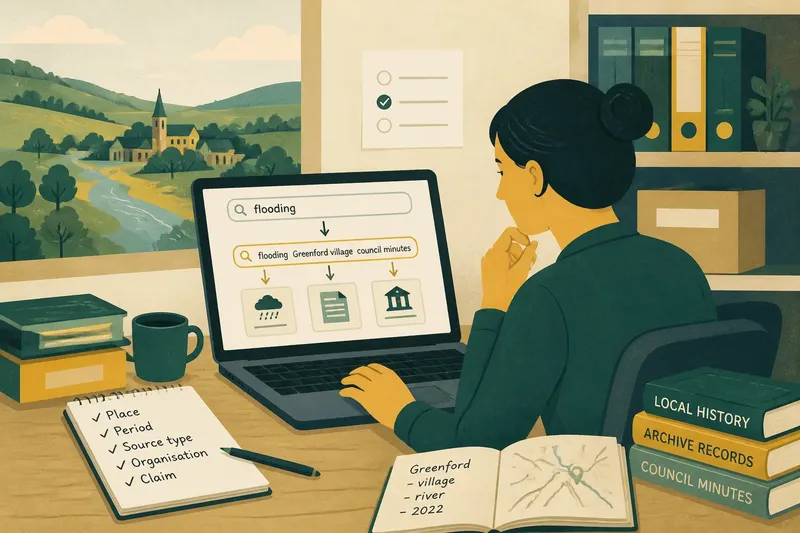
Choose the source that is best placed to answer the exact question, then use a second source when the claim reaches beyond that source’s role. A practical sequence is:
- State the question narrowly. Decide whether you need an official record, an explanation, a comparison or an organisation’s own position.
- Identify the publisher and purpose. Find who is responsible and what the page appears designed to accomplish.
- Inspect the supporting material. Follow a relevant citation or link and check what it actually establishes.
- Match the claim to the evidence. Notice whether the page reports, interprets or promotes, and do not treat those actions as interchangeable.
- Seek a different vantage point if needed. Add an independent explanation or the original record when one source cannot settle the question.
The right choice depends on what you need to know. A primary record suits a question about what was formally written; specialist interpretation suits a question about meaning; a service page suits a question about that organisation’s own offering. The source’s purpose is not a reason to reject it automatically. It is a guide to the claims it can responsibly support.
So, when deciding whether a top result is the best answer, begin with the source, not its position on the page. Identify its purpose, name the claim you need to verify and choose evidence that can bear that claim. If you cannot tell what a page is for, treat it as a lead to follow rather than the answer to rely on.