From Card Catalogue to Searchable Archive
From card catalogue to searchable archive: see what metadata carries forward, what digitisation leaves uncertain, and how to read digital records carefully.
A searchable archive can retrieve a record that once required a walk along a catalogue drawer, but it cannot automatically preserve everything that made the record legible. The shift from card catalogue to searchable archive changes how people locate material; it also makes metadata—the description attached to an item—more consequential.
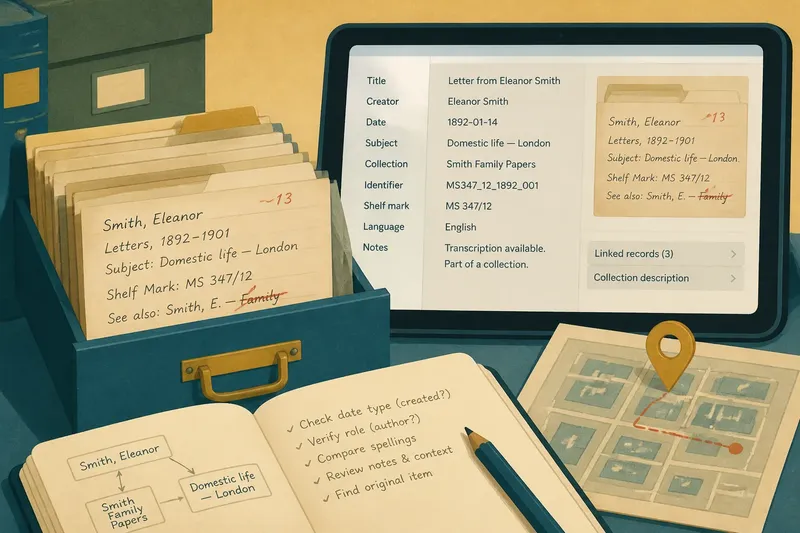
A card might show a name, a subject heading, a shelf mark and a handwritten correction. A digital record can make those details searchable across a collection, yet the scan of the card may not explain why a heading was chosen or what the catalogue left out. Reading an archive well means treating the record as both a route to an item and evidence of how that item was described.
What changed in the catalogue?
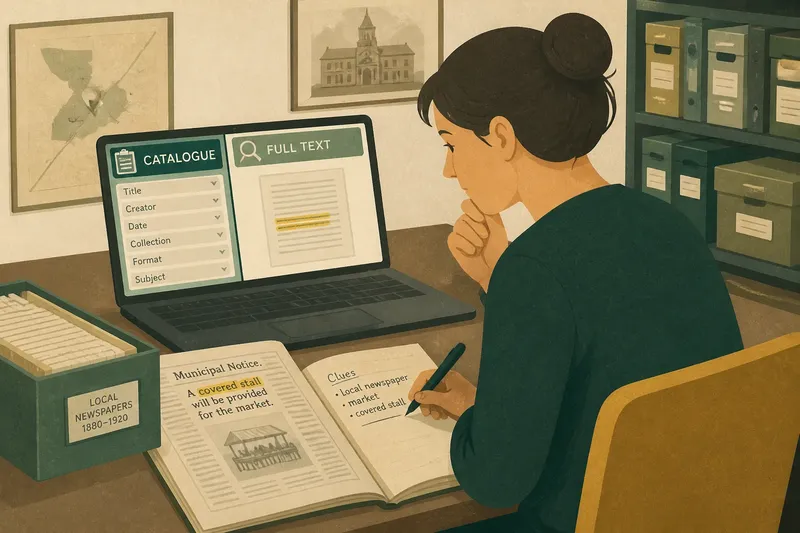
A physical card catalogue arranged descriptions in drawers, usually by author, title or subject. A reader had to know which drawer to consult and follow its filing order. That arrangement made the catalogue’s structure visible: cards sat beside related entries, and cross-references could direct a reader from one name or term to another.
Digital catalogues replace that physical sequence with records that can be retrieved through search fields, filters and links. A single item may appear in searches for its creator, title, subject, date or identifier. This is useful, but it makes the interface—not the drawer—the main view of the collection’s arrangement.
Digitisation can refer to several different things. An institution might scan catalogue cards, create digital descriptions of physical objects, or provide image files and text transcriptions of the objects themselves. These are not interchangeable. A scanned card lets someone inspect an old description; a structured catalogue record lets software search selected fields; a scan of a book page offers access to the page, not necessarily reliable searchable text.
What does metadata preserve?
Metadata preserves selected facts and relationships in a form that people and systems can use. Common fields include title, creator, subject, date, format, collection, identifier and location. A record may also note language, edition, provenance or the source of its description. These fields help distinguish an item from similar ones and connect it to other holdings.
Structure matters as much as the words in a field. If a creator’s name is stored consistently, a catalogue can bring together records filed under that form. If a subject term links to a controlled vocabulary, the interface may gather materials described with the same authorised term even when the wording differs from ordinary speech. An identifier can point to one specific record even if its title is later corrected.
Metadata can also preserve traces of cataloguing practice. A subject heading, a note about an item’s former owner, or a distinction between an original and a copy records choices made by a person or institution. Such details can help a reader understand how an object entered a collection and how staff classified it. They do not, by themselves, explain the full context of those decisions.
Think of metadata as a compact description, not a miniature version of the object. It can preserve a creator’s name while leaving their role unclear; it can record a date while omitting whether that date refers to creation, publication or acquisition. The record is most useful when its field labels and notes make those distinctions explicit.
What gets lost in digitisation?
Digitisation can leave unresolved anything that was absent, ambiguous or difficult to represent in the original description. A card with an unclear handwriting correction may be scanned faithfully, but the scan does not settle what the correction means. A catalogue that never recorded a contributor cannot supply that information merely because its records are now online.
Scans also have limits as images. Faded ink, torn edges, cramped annotations and marks on the reverse may be hard to read or omitted from a scan. A transcription can make text searchable, but it may misread an unusual name, a smudged word or a handwritten abbreviation. When an image and its transcription disagree, the image offers evidence to inspect; it does not always provide a definitive reading.
Some qualities resist neat description. The order of items in a box, the binding of a volume, the scale of a map and the difference between paper stocks may carry meaning that a short record cannot express. A digital surrogate can show parts of these features, depending on how it was made, but it cannot reproduce every quality of the physical object.
Nor does online availability mean that a whole collection has been digitised. An archive may publish catalogue records while providing images for only some items. It may describe a folder without scanning the contents, or digitise selected pages rather than an entire volume. Readers should distinguish a record that points to material from a digital copy that displays it.
How should a digital record be read?
Read the record’s fields before treating its search result as a complete account. Check whether a date describes the item or its acquisition, whether a name identifies an author or another contributor, and whether a subject term is the institution’s own wording. Notes, collection descriptions and links to related records often clarify what a compact result cannot.
Suppose you search an archive for a family name and find a scanned catalogue card alongside a digital description of a letter. The card uses an older spelling, while the letter’s record gives a standardised form and links to a collection-level description. Comparing those entries may reveal that they refer to related material, while the differing spellings show how the archive represented the name at different stages. The link suggests a route for further checking; it does not establish that every matching record concerns the same person.
Where a digital record points to an uncopied item, follow its location or request information from the holding institution. A shelf mark or box reference can be as useful as a downloadable image: it identifies where the physical item sits within the collection. If you cite or share the record, use the persistent link or identifier offered by the archive rather than relying only on a search-results address that may change.
Why do old headings matter?
Older catalogues may use language that is now unfamiliar, inconsistent or offensive. Those terms can remain in scanned cards, transcribed records and searchable subject fields. Their presence is evidence of past description, not a neutral statement about the people or materials described.
Institutions may retain a historical term to document the original catalogue, add a current term, or provide a note explaining the change. Each approach preserves different things: the original wording can help identify the card or record, while updated language can make material easier to find and describe more respectfully. A catalogue may not expose the history of that revision in its main search view, so a record’s notes and collection policies can matter.
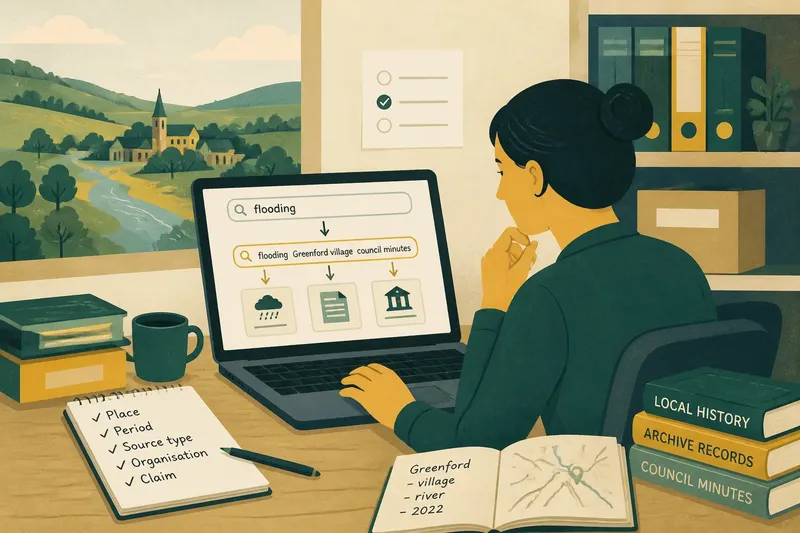
It is not worth trying every conceivable spelling in a long succession if the archive offers a subject thesaurus, name authority record or collection guide. Those tools can show preferred forms and cross-references. If the catalogue does not expose them, a focused search using a known title, creator or identifier is often more informative than repeatedly changing a broad term.
Questions about searchable archives?
Does a scanned catalogue card count as a digital record?
It is a digital image of a catalogue card, and it preserves the card’s visible marks as captured. Unless the text has also been transcribed or indexed, a search system may not be able to find words written on it.
Why can’t I find an item by its exact title?
The title may be abbreviated, misspelt in the source, recorded in another field or absent from the searchable description. Try a creator name, collection title or identifier, then check the archive’s guide for the relevant series.
Does a digital catalogue replace the physical catalogue?
It can replace routine access to many catalogue entries, but not necessarily the card’s material features or the context of its arrangement. Some institutions retain cards because they contain annotations or links that were not carried into structured records.
Can I cite a digital archive record?
Usually, cite the item’s creator or title where known, the collection and holding institution, and the stable identifier or persistent link. Follow the institution’s citation guidance, especially when you consulted a physical item rather than a digital copy.
What should remain uncertain?
A digital archive is strongest when its records make their limits visible. A note that a date is approximate, a transcription is incomplete or an image covers only part of an item helps readers judge what can safely be inferred. Where no such note appears, absence of a qualification is not proof that every detail has been settled.
The move from card catalogue to searchable archive makes descriptions easier to retrieve and compare, but it does not turn description into the object itself. Use metadata to find connections, inspect images where available, and keep the distinction between what a record states and what it leaves unresolved. That habit makes the searchable archive more useful without asking it to answer questions its records were never built to settle.